
If there was ever a time to finally get around to writing this blog post, the time is now.
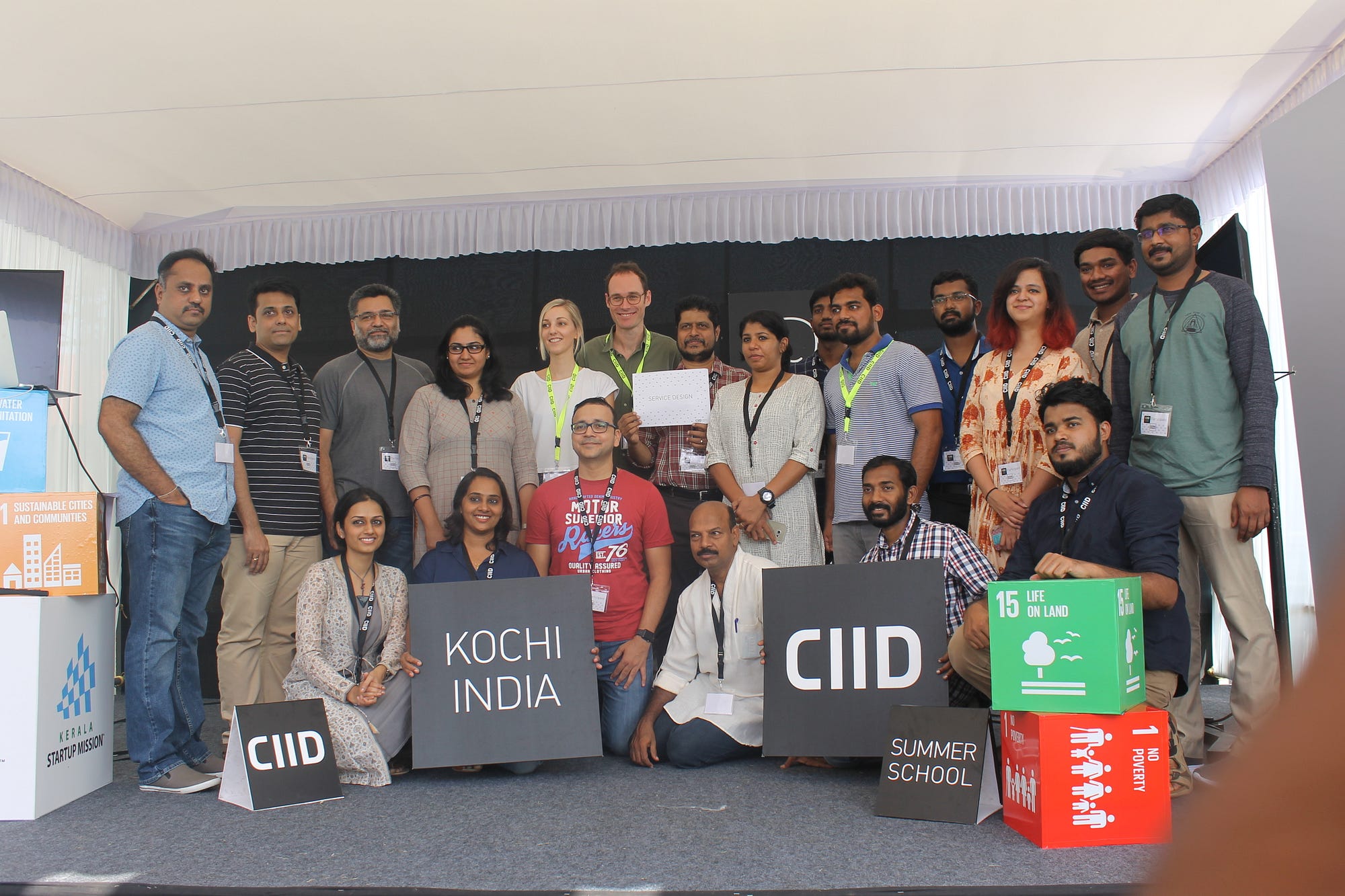
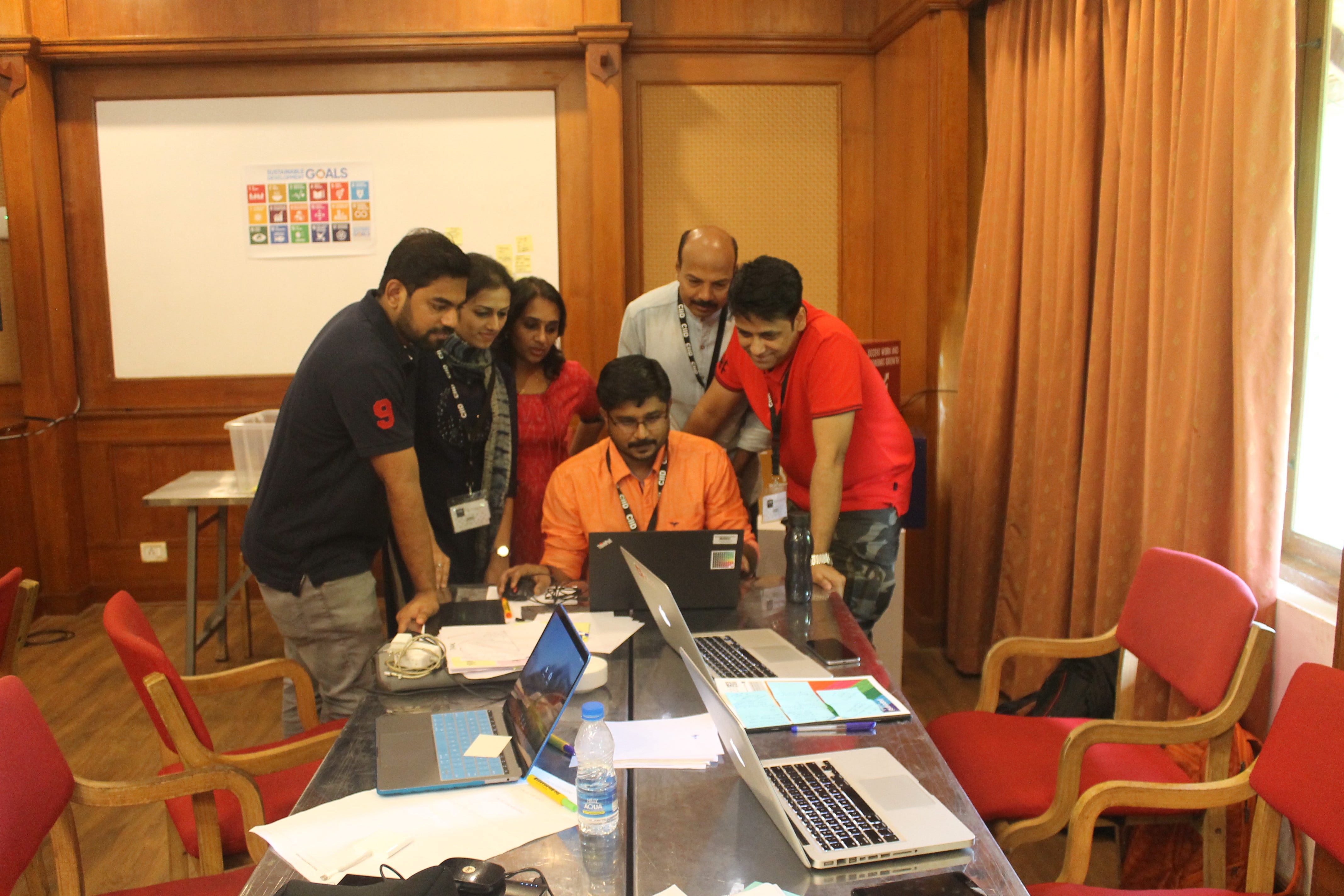
In December 2018, I was lucky enough to teach Service Design in Kerala, India as part of Copenhagen Institute of Interaction Design summer school program. Teaching with ex-Ideo Aram and all round ‘Entrepreneur, Artist and Futurist’ (I stole that from your linkedin!) we wanted to see how service design methodologies could be used to prevent future disasters and in this case flooding in Kochi. Relying on the local expertise from the amazing class, we ended up with a full end-to-end service blueprint looking holistically across the before, during and after the flood, and how can we rely on the local communities and in particular sharing platforms across Kochi.
Running a course for 5 days trying to not only teach the basics of Service Design as a practice, but also to get some actionable things out of it, was a challenge. The brief to the class was co-creating resilient services able to adapt and evolve in a rapidly changing world (which as you can imagine is highly relevant at a time like COVID-19). We used our usual course structure that looked something like this:
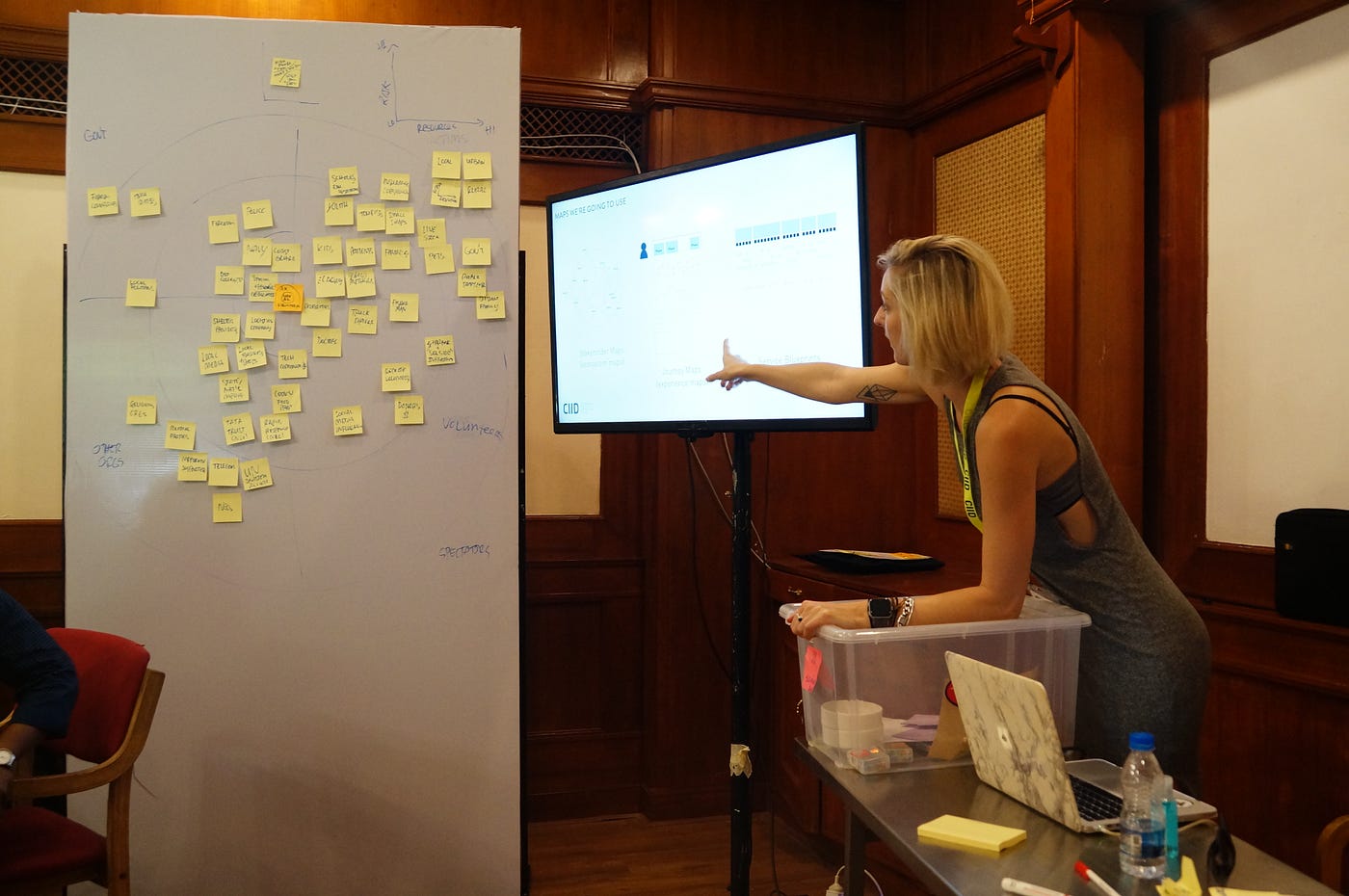
Course outline:
- Introduction to Service Design
- Research : Tools and planning
- Research download
- Synthesis
- Brainstorming
- Prototyping
- Blueprinting & Story telling
Before we set out the class we did some of our own research on the 2018 Floods and the response to it:
During the flood:
Coordinating rescue efforts
Collecting and distributing relief goods
After the flood:
Waste clean up
Home remediation
Disease outbreak prevention
Distribution of relief
Mental health helpline
How can we learn from these quite reactionary steps in order to prevent such disastrous affects on the community and infrastructure for the next inevitable flood, looking at: Government and community partnerships, creating security and building capacity, involving trainees and volunteers and changing to a preventative mindset and long term thinking.
With this in mind we split the class into three teams.
BEFORE the flood (Team 4Cast)
DURING the flood (Team ReInnovate)
AFTER the flood (Team Response).
That way each group could focus on a set of users with their own pain points and we made sure to share back throughout the day so that understanding was on a holistic level and each group could learn from the whole class and understand the entire journey.
We started with two main questions:
How might we create a resilient web of support (services) among trusted autonomous actors? (i.e. fisherman, religious organisations, military, government, NGOs, good samaritans)
How might we leverage the gig economy to inspire disaster preparedness and crisis response services?
We were lucky enough to have a vast array of skillsets in the class, and even some who were directly affected by the devastating floods in Kerala a few months earlier. Government officials, local community members and fishermen were amongst some of the profiles the class interviewed.
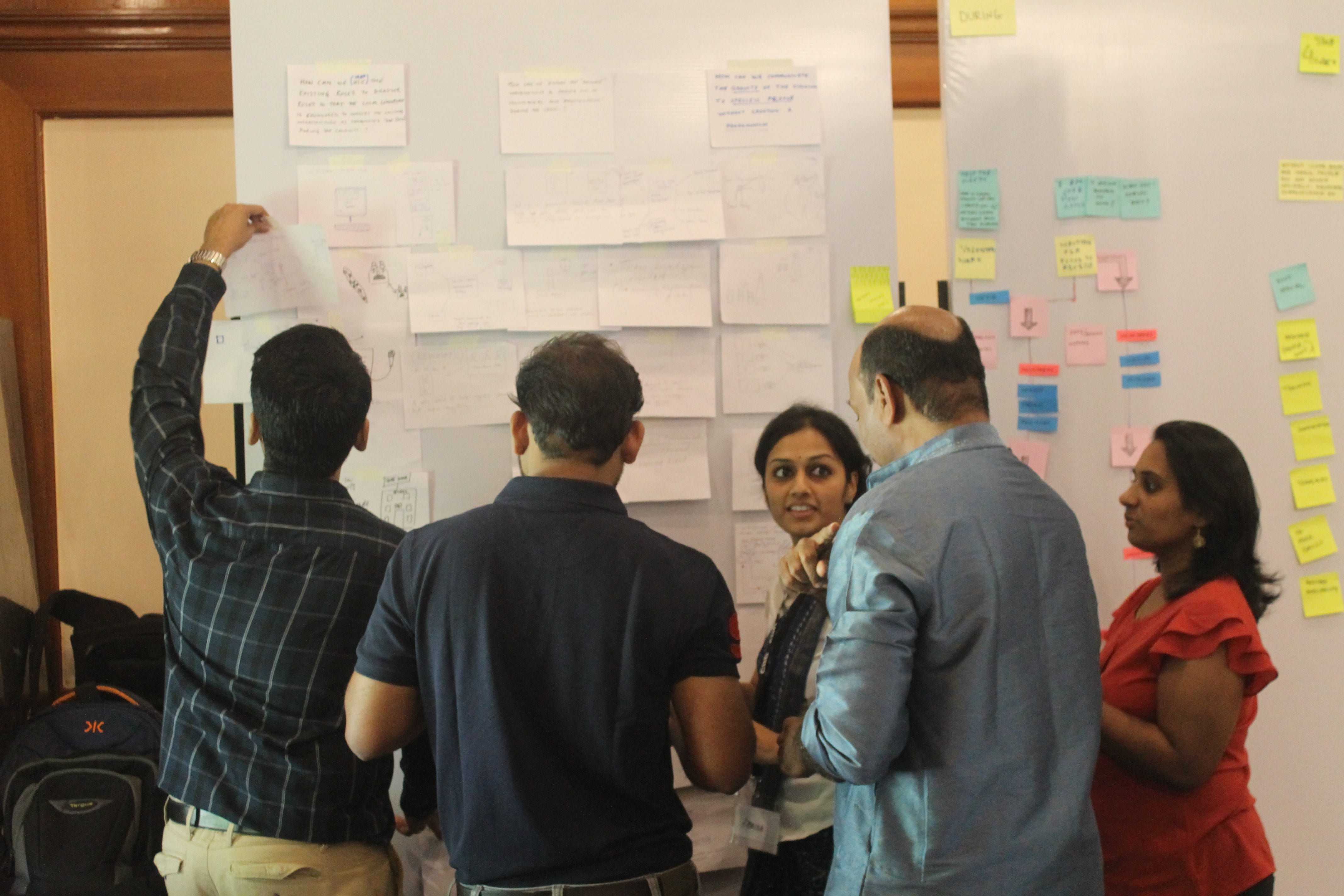
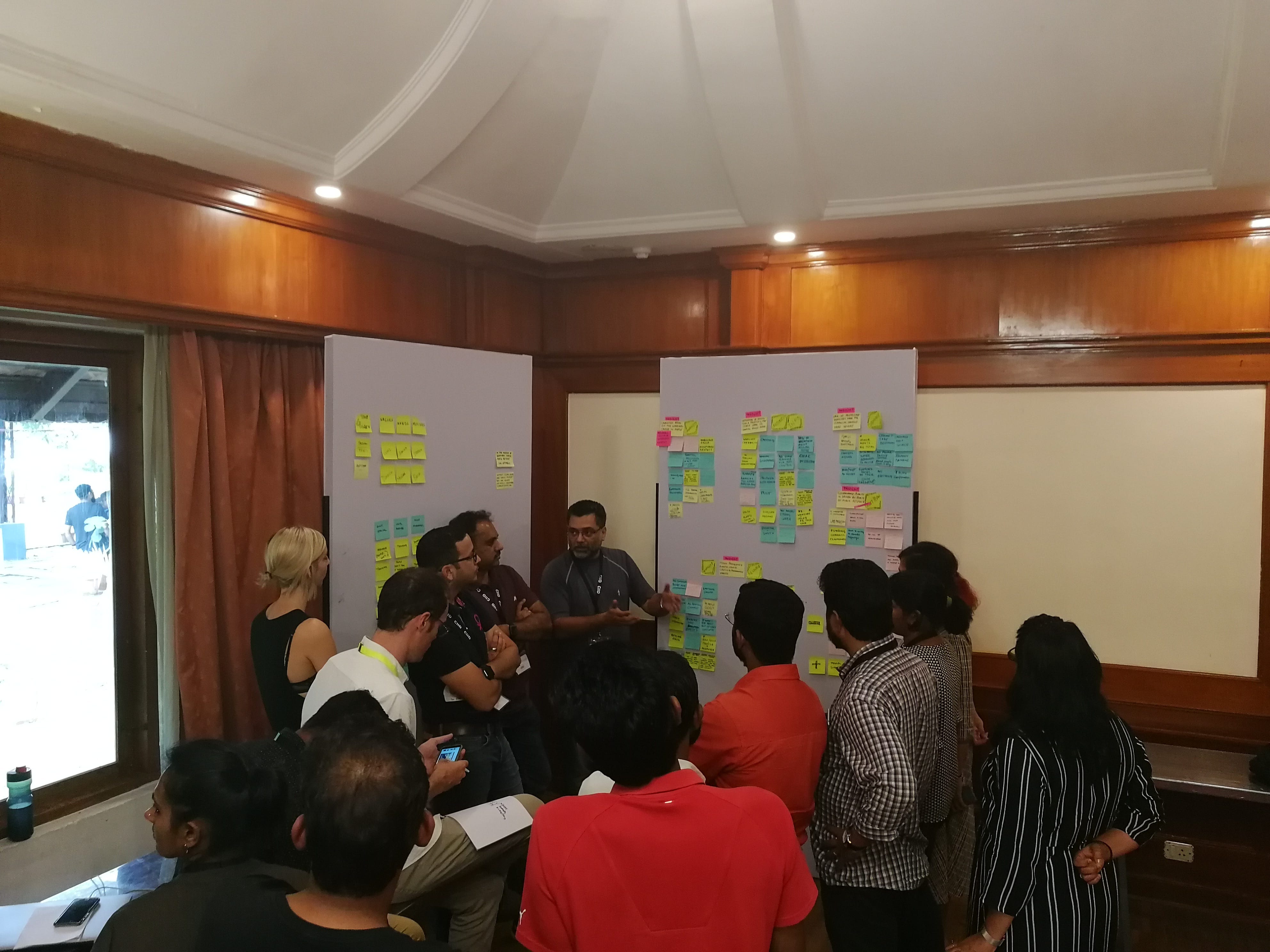
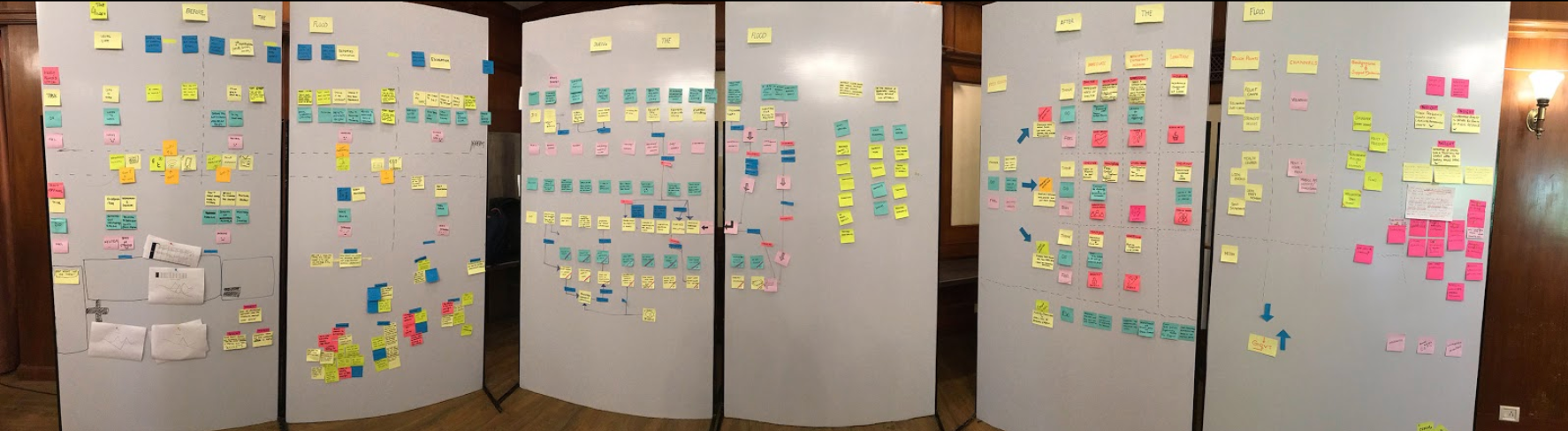
We managed to map out the entire journey of a natural disaster across the three teams, through a user journey displaying pain points (think, feel, do), channels used and stakeholders involved (through a collaborative eco system mapping exercise with the entire class). Some key takeaways that came out of the blueprinting were:
- Leadership and unity in work emerges in situations of emergency
- Keeping up the morale of victims and volunteers was a crucial aspect in better managing the situation and building up trust
- From different vantage points (victims, volunteers, etc) the perceptions of the challenges varies and thus making it difficult to find convergence and this leads to a policy vacuum
- The authorities, volunteers and affected people struggled to pass on information in a timely manner due to gaps in the communication chain
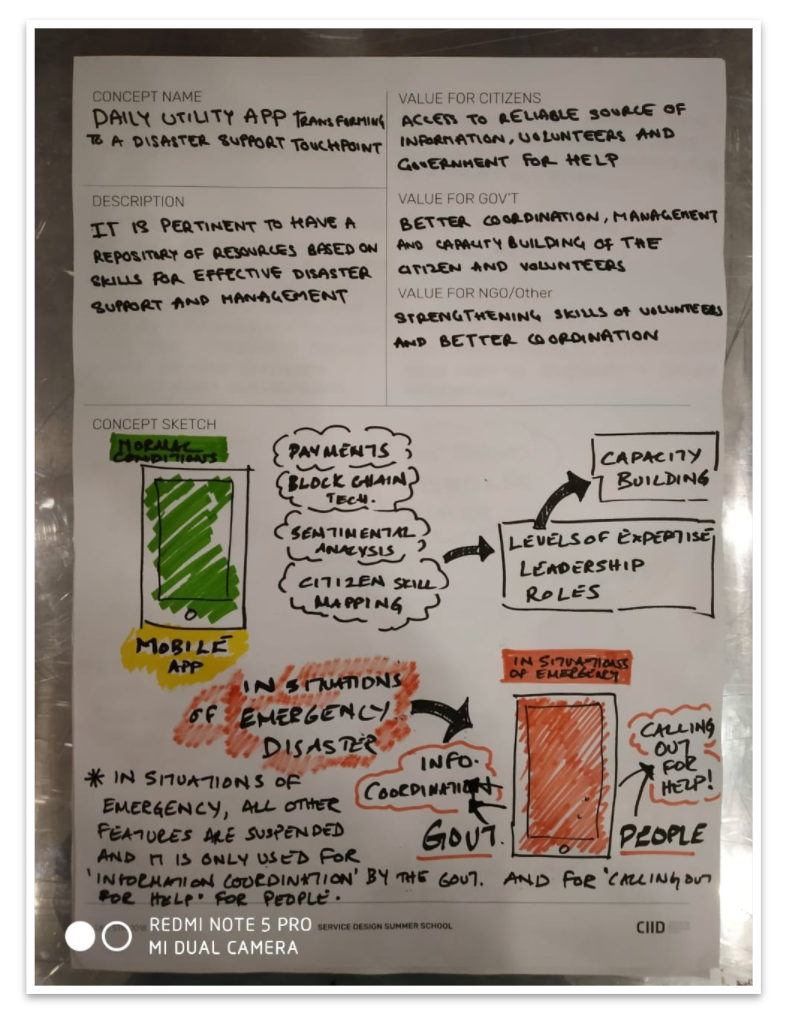
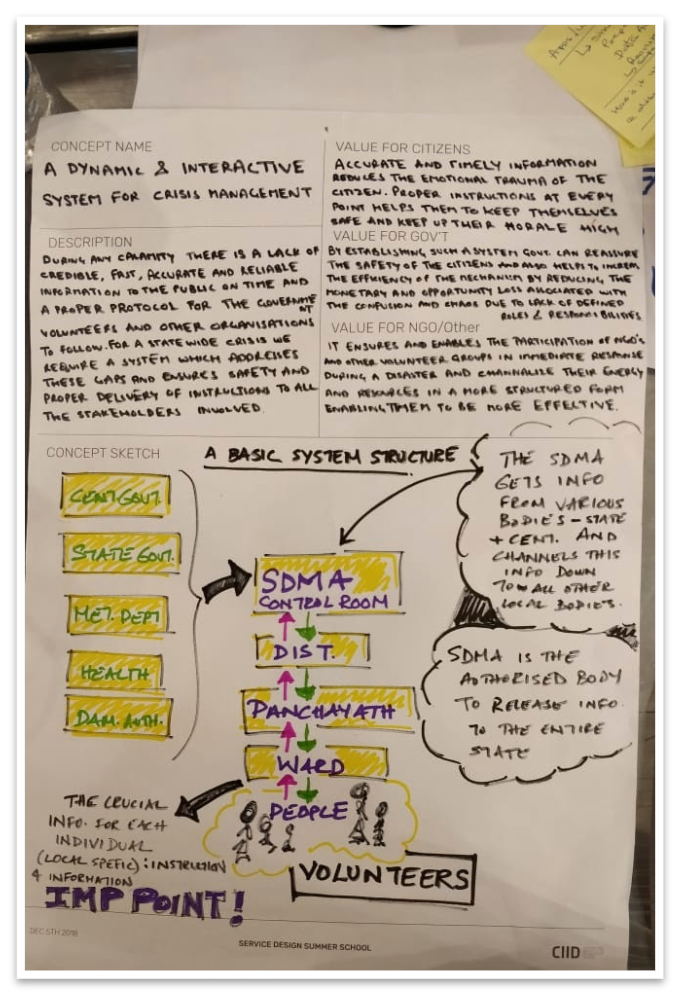
Each team were able to think of solutions around a particular moment of the journey in response to the insights they had crafted and started building out potential concepts thinking of the value for the citizens, Government and NGO’s:
What does this mean for COVID-19?
Some learnings from me on reflection of teaching that course. I had never used a service blueprint in the context of a natural disaster, it was great to see the class so engaged as it was something they were living through, the passion and expertise is something that helped push the course along — which we would not have been able to do in the 5 days. In today’s climate I am noticing some similar behaviours to what we heard from the 2018 Kochi floods.
- Trust and reliable communication: Lack or distrust in government messaging (people not taking the messages seriously) and not one central place to find out the correct most up-to-date information. This is becoming a global commonality during COVID-19.
- Displaced community members: The elderly being the generation that is at most risk for displacement and the most stubborn not to leave (in the case of the flooding on Kochi) and stay isolated (in the case of COVID-19)
- Responsive grassroots initiatives: Communities coming together in times of need, creating their own grass roots hacks, including leveraging the gig economy
- Tech Accessibility: Designing solutions for the vulnerable, without internet or connection can be a constraint we need to be able to adapt too. In case of COVID-19, we need to adapt and teach how to stay connected/offer support remotely
Finding ways to keep these insights alive and using them for future crisis’ (and even this crisis) is always something we struggle with as a contractor or agency side Service Designer and researcher, if it is not something we are working on daily. I spent an hour yesterday morning on a Zoom call with Sarah Drummond and 80 other people talking about using patterns to help consider how services start delivering remotely in the local/social/civic/charity space.
It is refreshing to be on a call with so many people trying to do the right thing during this moment of crisis, and sharing learnings so we can all deliver as best we can.
 Leila Byron
Leave a comment