
I haven’t spent the entire quarantine playing Animal Crossing and binge watching Netflix shows (that’s only 80% of my time!), the rest of the time I am trying to get through my reading list of the following books:
- Good Service — How to design services that work. Louise Downe
- Misbehaving. Richard H. Thaler
- Orchestrating Experiences. Chris Risdon and Patrick Quattlebaum
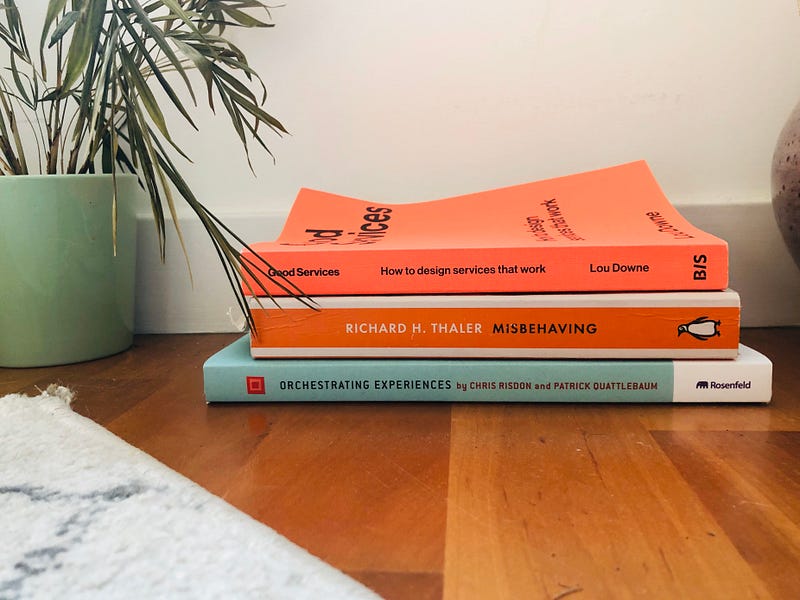
I am about half way through Misbehaving, but the bright coral cover with just as much burst inside from ‘Good Services’, drew me in a bit more and I finished Good Services one sunny weekend.
So what was Good about Good Services?
Service design is a team sport — and a definition of good services with common principles gives you and everyone else working on your service a common focus and goal.
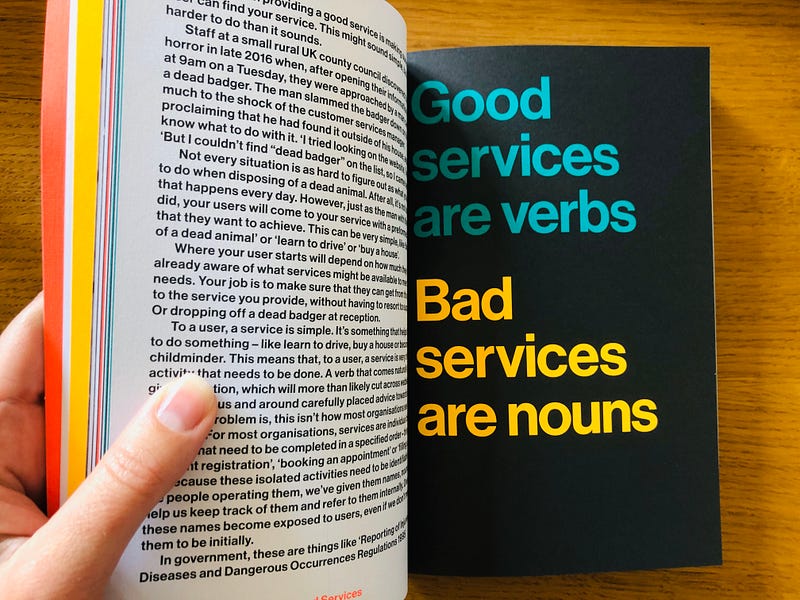
What was different about ‘Good Services’ than any of the other Service Design books out there, was it was filled with rich current case studies. Often enough we always resort back to those classic ‘good’ (maybe at the time) services to illustrate points, but what I found was Lou was able to give good examples ranging from Government services across the globe to football (yes football, that inspire my previous blog post) which kept the book fresh and current.
The book is broken into 15 key principles and I wanted to highlight a couple of them and other learnings from the book.
1. Back to basics of Service Design
When asked what is Service Design, there are often a number of ways people describe it, and if you are interested in some of those definitions be sure to check out David Lowe “What is Service Design” series on youtube (and you may find me there soon). I like how Lou took it back to the basics, with no added fluff and let us know what it is…
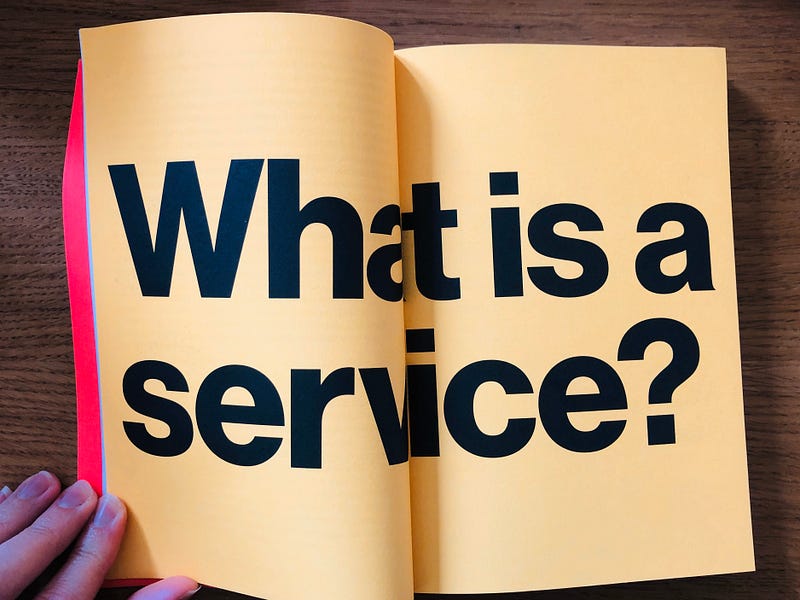
A service is something that helps someone do something — only your user can determine what the service is.
It can be broken down into ‘steps’ things your user needs to do, to get to the overall goal. And ‘tasks’ individual things you need to do to complete a step.
We interact with services everyday and what service design is doing is making it easier for us to complete those tasks. Monzo of course was an example that Lou referred to quite a lot, but for good reason. Monzo helps a user complete the process of opening a bank account in a few crucial steps, from what used to be a headache of a process, having to use multiple different channels interacting with multiple different aspects of the business, Monzo made it quick and easy to do the one goal the user wanted to achieve which was to open or switch their bank account.
Building a service that works is a sorely undervalued activity of service design.
Another basic that Lou illustrated well, was that not all services have to be new and shiny. Building robust services that actually work for the user is such an understated thing. Stakeholders often want the “magic” but without the grounding in place how can you deliver any sort of magic?
Which takes me onto point 2.
2. Service Design Patterns
There has been a rise of design systems over the last few years. Companies are making a suite of products that want to adhere to the same design and so it makes sense to focus on building up the foundations of a design system. It means everyone can work more efficiently (devs and design) and the service feels the same from the users perspective regardless on which one they use.
Lou touched on this idea of design patterns needing to be learnt. The example she used was based on the new fancy toilet locks on trains that run in the UK. The standard lock is easily recognisable, you go into the toilet you pull the bar and there is a small indicator to show you that the door is in fact locked.
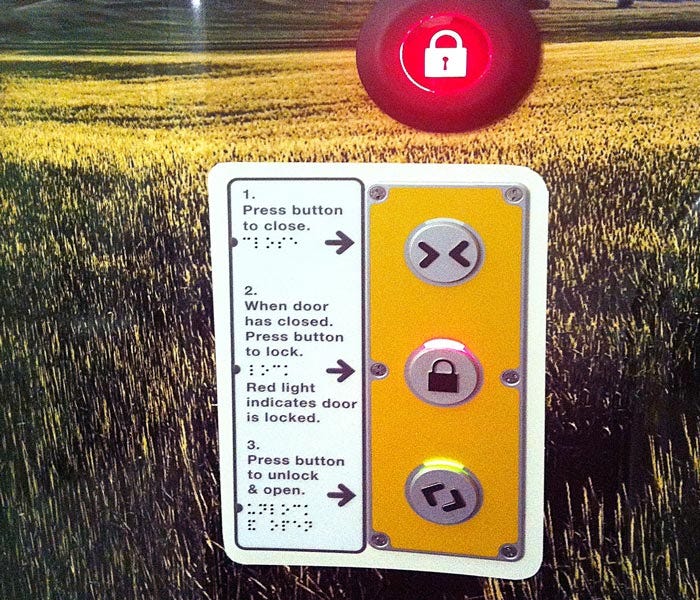
A UK based train company (Virgin trains!) wanted to challenge this, so they installed a new system. One which would become a laughing stock to many. First press the button to open the door. Walk inside. Find the next button that closes the door. Press it. Wait. Wonder whether it is closed and locked, or just closed because you can’t see a manual lock. Press the button again. Door opens. Do this a few more times before you just risk it and use the toilet.
What Lou was talking about was a design pattern, one that is globally recognisable, easily understood by the user and intuitive, a lock.
Once something becomes a design pattern, it’s very difficult to change it. Any change, no matter how much of an improvement has to gain a certain amount of ubiquity to be able to be learned. Services are no different.
And why do we have to think we need to change everything? ‘Assuming all services are unique is wrong’ Lou continues. And she isn’t wrong. There are design patterns/systems, material design and everything else that has been tested and validated but what about services? Much like visual design, can we create a tool box for service patterns across services, built on insights learnt that would provide a basic library so that we are not reinventing the wheel when not needing too.
3. Making sure your user can complete their steps, regardless of who is providing it.
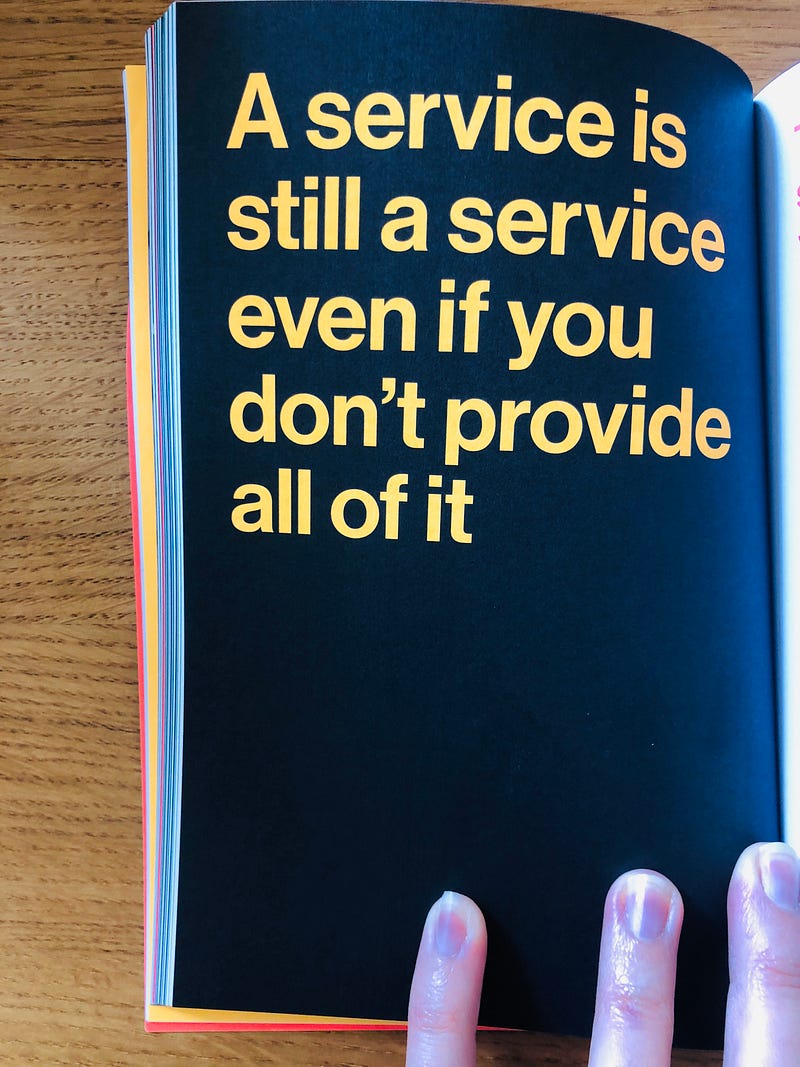
Having worked in agencies the majority of my service design career I still find it shocking how big organisations work so siloed that they have no idea what other aspects of the business are doing and it takes you, the consultant, to come in and shed some light on that.
Service Design has been used in many ways to bring business units together by showing them visually (usually in the form of a service map) what the front and back end views are of their product/service.
A majority of today’s services rely on integrations with other systems to help with things such as open banking, booking a vacation experience whilst booking your accommodation, integrating with old systems in healthcare and filling out a marriage license. From the users perspective they want to complete the steps and are unaware (and don’t really care) who is providing each step.
Designing your service to fit within a wider user journey won’t just help you design a better service, it will help you understand how your service might be delivered most effectively, discovering other elements of your service that aren’t being provided by other organisations or, in extreme cases, change the way your service works fundamentally.
To my previous point, this can also be happening within the same business when partnering with different business units and back end systems (the Government was a great example of this). Mapping this out in it’s entirety can help you design it more effectively by showing them better ways for their data to flow (for example), and for the users to reduce the steps they are taking or to highlight cross overs in processes.
Overall, I think Lou did a great job at making this book fun and engaging and I would recommend this to anyone who is looking to understand the basics of designing good services, or who just want a refresher with some more up to date case studies!
 Leila Byron
Leave a comment